
Why stick to static prices in a dynamic world?
Ever walked into a fabric shop? The seller asks how many meters do you need? You pay by the length. Not by the whole roll. Simple. Now, think online. Can you do the same? Can you sell by weight, volume, or area? Or do you slap one static price for all? That doesn’t feel fair. Not to you. Not to your customer.
This is where WooCommerce pricing calculators come in. They change the game. They let your store breathe. Instead of rigid prices, they give flexibility. Products are sold by measure—prices adjusted on the fly. Customers type in what they want, and the plugin does the math. Clean. Quick. Transparent. That’s how modern e-commerce works.
Why Dynamic Pricing Matters More Than You Think
E-commerce isn’t static. It’s alive. Customers don’t all buy the same quantity. One person needs a small piece of glass. Another wants enough for an office tower. Pricing should reflect that. Otherwise, you lose trust. You lose sales.
Dynamic pricing calculators solve this. They speak the customer’s language. Length. Width. Area. Volume. Whatever unit matters. Instead of clunky math in the head, the store shows the right price instantly. The shopper smiles. You smile too. Both sides win.
What Exactly is a WooCommerce Pricing Calculator?
Think of it as a smart mediator. You set rules. Customers enter values. The plugin calculates the price. Done.
No endless lists of product variations. No messy discounts. Just a direct connection between need and cost. It’s especially powerful for industries like textiles, flooring, printing, and food. Anywhere people buy not “a product” but “an amount.”
Benefits Nobody Tells You About
Let’s be honest. Static pricing is lazy. Dynamic pricing feels alive. Here’s why these calculators matter:
- Accuracy. Nobody gets overcharged. Nobody underpays.
- Flexibility. Units can be in meters, liters, kilograms, or square feet.
- Saves time. No endless manual edits.
- Happy customers. They see transparency. They trust you.
- Better sales. Confidence creates conversions.
- Fewer errors. The plugin handles math. Not human guesswork.
- Stock sync. Each variation tracks its own quantity.
It’s not just tech. It’s a business advantage.
Top WooCommerce Pricing Calculators
Now, let’s get to the stars of the show. These are the plugins that make measurement-based selling easy, reliable, and yes—profitable.
1. WooCommerce Variable Pricing Calculator
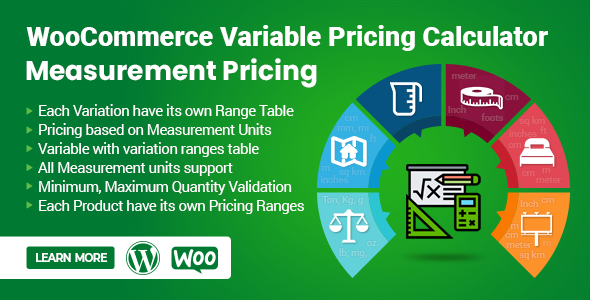
This one stands tall. Built for serious sellers. It allows you to set separate pricing tables for every variation. Each variation has its own rules. No hassle. No confusion.
Features that stand out:
- Each variation gets its own pricing table.
- Pricing works with measurement units—weight, length, area, volume.
- No limits. You can add as many pricing ranges as needed.
- Stock managed per variation.
- Minimum and maximum order rules.
- Easy setup. Anyone can configure it.
Imagine you sell tiles. Customers pick 20 square feet. The plugin calculates the exact price. If someone tries to buy less than your minimum, it blocks them—perfect balance of control and flexibility.
Best for: Sellers of textiles, flooring, liquids, and all things measurable.
2. WooCommerce Measurement Price Calculator
Another heavyweight. Popular and widely used. This plugin lets you sell products based on dimensions. Customers type in measurements. The system calculates the price.
Read: Top 5 Salesforce DevOps Adoption Challenges
Highlights:
- Input dimensions directly.
- Flexible units: area, volume, length, weight.
- Minimum and maximum validation.
- Works with both simple and variable products.
Think about a wallpaper shop. One customer wants 12 feet. Another needs 50. Both get exact prices. Smooth.
Best for: Construction suppliers, textile sellers, home décor businesses.
3. WooCommerce Dynamic Pricing & Discounts
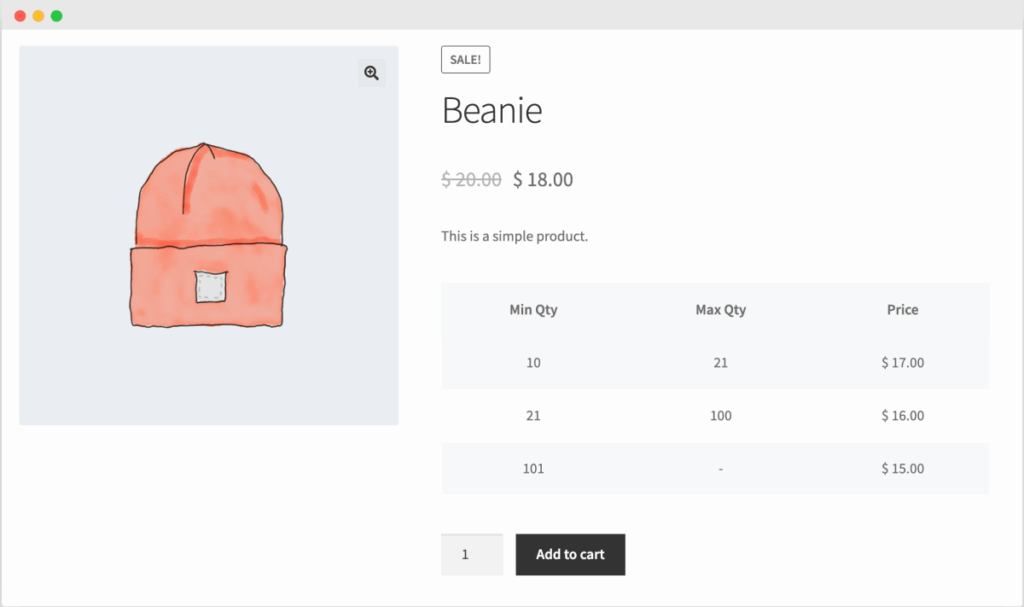
Now, this one is a bit different. It’s not just about measurements. It’s also about promotions. You can mix dynamic pricing with discounts.
Key features:
- Bulk pricing rules.
- Role-based discounts.
- Tiered pricing.
- Combine measurement rules with sales campaigns.
Perfect for sellers who want flexibility plus marketing punch. Say you sell floor tiles. Customers pay by area. But if they buy more than 100 square feet, they get a discount. Automatic. No headaches.
Best for: Stores running frequent promotions while selling measurable goods.
4. WooCommerce Product Add-Ons with Price Calculator
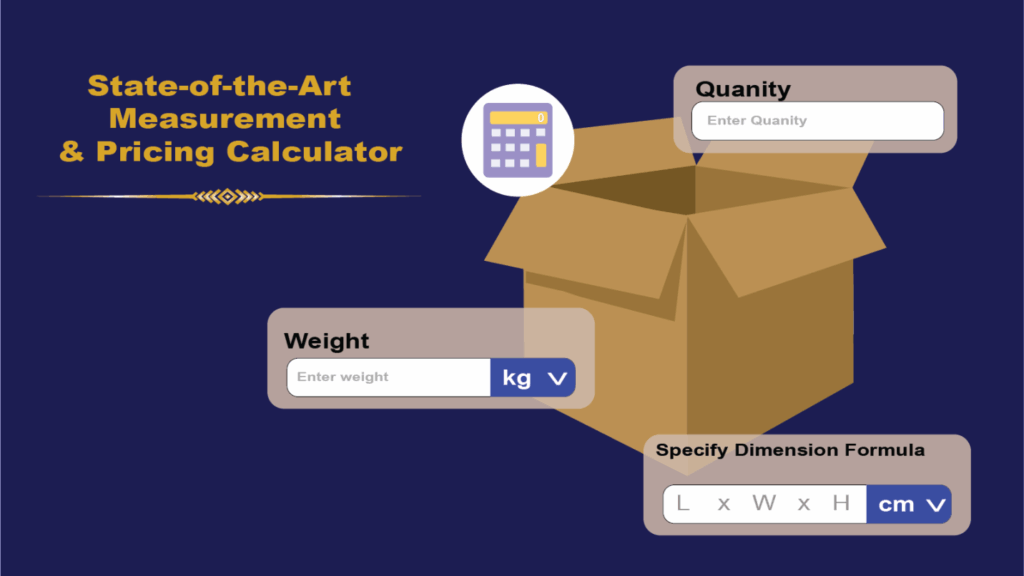
Personalization meets calculation. This plugin is designed for custom products. You add extra fields—dropdowns, checkboxes, sliders. Customers configure their order. The calculator updates the price instantly.
Why it’s useful:
- Real-time updates.
- Extra product fields.
- Works with both digital and physical items.
- Perfect for upsells.
Think of a printing shop. Customers upload a design. Choose paper size. Add lamination. The calculator shows the final cost right away. Transparent.
Best for: Printing services, engraving businesses, and gift shops offering custom options.
Choosing the Right Plugin: A Simple Guide
So many plugins. All shiny. All promising to fix your pricing struggles. But here’s the truth—you don’t need them all. You need the one that fits you.
Do you sell by measurement or by customization?
If you sell fabric, flooring, or tiles, go measurement-based. You want a plugin that calculates cost by length, width, or area. Straightforward. But if you’re in printing, gifts, or services? You might need customization. Extra fields. Drop-downs. Checkboxes. Maybe even file uploads. That’s a different road.
Do you need a simple setup or advanced formulas?
Some plugins are plug-and-play. A few clicks. Done. Others let you write formulas, mix units, and create complex pricing rules. But with power comes complexity. Are you a store owner who wants speed? Or are you ready to spend time building smart rules? Be honest with yourself.
Do you run promotions often?
Not every plugin loves discounts. Some handle them well. Others, not so much. If your business thrives on “buy more, save more” campaigns, you need a plugin that merges measurement pricing with discounts. Otherwise, you’ll be fighting your own system.
Do you want extra fields like checkboxes, or just pure measurement?
Sounds simple, but it’s huge. A pure measurement calculator is clean. Customers type in numbers. Price shows. Done. But add-ons bring flavor. A checkbox for lamination. A slider for the speed of delivery. A dropdown for material choice. If your store thrives on customization, you’ll want those extras.
Do you need strong support and updates?
Plugins aren’t install-and-forget. They need care—WooCommerce updates. Themes change. Bugs appear. Without strong support, you’re stuck. And downtime in e-commerce is deadly.
The point? Don’t match your business to the plugin. Match the plugin to your business. That’s the golden rule. The wrong tool slows you down. The right one? It feels invisible. It just works. And when it works, customers don’t think about pricing. They buy.
Real-World Examples: Where These Shine
Let’s play it out.
- A fabric shop. Customers buy in yards. A calculator makes the cost crystal clear.
- A tile seller. Pricing by square foot keeps quotes fair. Customers trust what they see.
- A butcher. Meat is sold by weight. Dynamic calculators remove confusion.
- A printing press. Posters are priced by size and finish. Customers see every penny.
- An event planner. Custom packages built with calculators. No surprises later.
Different industries. Same solution—pricing calculators.
Future of Dynamic Pricing
We’re moving fast. Tomorrow’s e-commerce won’t stop at measurement. AI will step in. Prices may adjust based on demand, location, and even customer loyalty. Already, calculators feel like the first step. A foundation. A bridge to smarter pricing.
For now, WooCommerce pricing calculators are more than enough. They give the flexibility customers demand. And the control sellers need.
Conclusion
E-commerce without flexibility is old news. Customers want clarity. They want fairness. They want control. Static prices fail at all three. Dynamic calculators win.
From selling fabric to printing posters, these tools make every order simple, accurate, and transparent. You don’t just sell products. You sell trust. You sell confidence. And that translates into more sales, fewer disputes, and loyal customers.
If you want the best mix of flexibility and control, nothing beats measurement-based pricing tools. Among them, the one that truly stands out is WooCommerce Variable Pricing—a plugin built to handle variations, measurements, and customer needs with ease.